
God’s unlikely choice for an ordinary angel
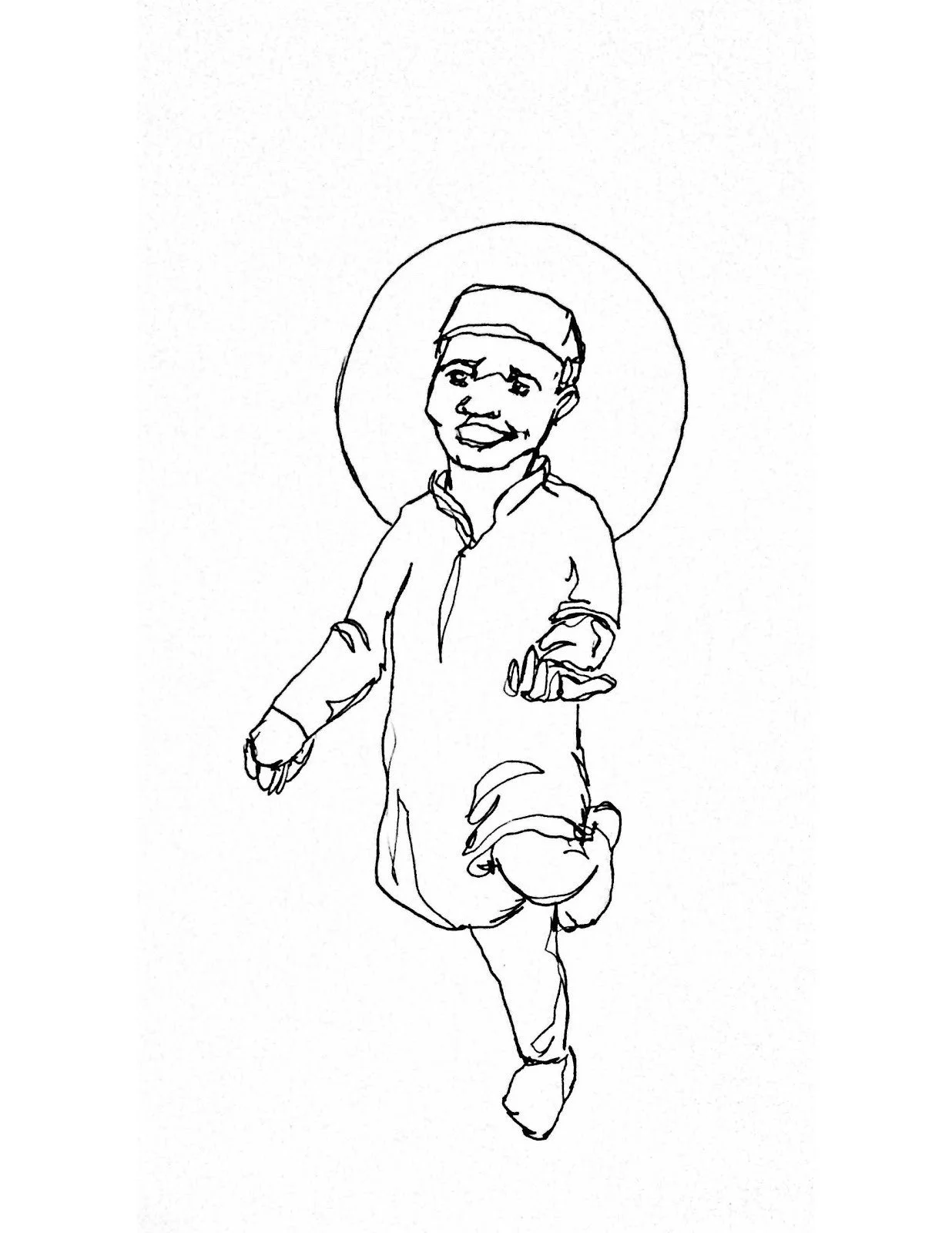
On the day that my book The Bible Smuggler was published on Amazon I had committed to help serve with Toys for Tot in downtown Portland. I had to tear myself away from promoting the book to help show compassion and dignity to some of Portland’s most vulnerable and often overlooked children. Extending Jesus’ love to these kids was more important than selling a book. Here is a passage taken from my book that shows how I came to understand God’s view of forgotten children. On a weekly basis I tutor two fifth grade girls who are just now learning English. There are many ways we all can show kindness and compassion.
Passage taken from The Bible Smuggler
After meeting with a church in Bitila, Macedonia, I proposed taking some of the church leadership to an ice cream shop.
As the six of us squeezed into the camper, a hoard of unkempt little boys in ragged clothes appeared and surrounded us. They looked like the cast of a zombie movie with shaved heads and splotches of purple Gentian Violet dabbed on their bony little bodies. Scabies and other fungal infections plagued them. There were no girls in this troop of wild youngsters. The boys reached out their hands, begging for “Kaugummi” (German for chewing gum). Surprised by the commotion we were causing, I asked Hristos’ brother where these kids came from and what they wanted.
He said, “This is a tremendous problem here in Macedonia. These are the offspring of Albanian Muslims. The Muslims are breeding like rabbits with ten and fifteen children in a family. They keep the girls inside and they have babies at fourteen or fifteen years old. Most of the parents are uneducated, unemployed and a scourge in our Republic. Muslims are pouring into Macedonia because they get more government benefits than in Kosovo. The government must do something to stop them.”
Shocked by such vitriol, the magnitude of ethnic hatred and divisions ran deeper than I realized. Where was the compassion for these children perceived as little better than rodents? When people dehumanize one another, they can plant the seeds of ethnic cleansing. Sadly, those seeds would sprout into the horrors of war with Slobodan Milosevic’s ethnic cleansing of Kosovo’s Muslims in a few short years.
As we pulled away, jouncing along a side street filled with potholes, this unruly band of boys continued to run after the camper calling for “Kaugummi.”
We located an ice cream shop, but I found it hard to enjoy our treat thinking about those boys and realizing there were no easy solutions. As we visited with our new friends, the chaotic scene began fading in my mind. These little boys had no place in an ice cream shop. Like much of the world’s poor, they would soon be out of sight and out of mind. Their misery would fester and grow, but I was now part of another world.
A day later we were in another large city in Macedonia unable to find an address of one of our contacts and we needed help.
After much searching, we found Bis Street. It led into an area of the city that resembled a medieval village. Mud-walled houses lined both sides of the cobblestone street. As I eased the camper down the narrow lane, little boys in tattered clothes surrounded us. They were running, jumping, and tugging at one another, enjoying the spectacle we were causing. I pulled over and wrote the address on a piece of paper. None of the little boys seemed to make sense of my note. A slightly older boy emerged from the crowd who could neither hear, nor speak. He took the paper and shook his head as he tried to figure out what I wanted. I pantomimed looking for this address, which he quickly understood. He showed the note to several men dressed in white tunics and leggings who stood in doorways to observe the commotion.
One man pointed down the street. Armed with the address, our self-appointed diminutive deaf commander marshaled his troops and motioned for us to follow him. I squeezed the camper between houses for several blocks until the street made a sharp right turn, and we were now in a nice middle-class neighborhood. All the houses had front yards behind fences or hedges with locked gates.
My parade of street urchins ran down the street until they spied the house number we were looking for. Two of the older boys started banging on the gate. Another discovered the doorbell and began pushing the button over and over. Our little deaf Islamic cherub beamed as he motioned for me to pull to the curb. He became the hero of the day, having accomplished his mission of helping us find Ivan’s home. I left Kathy with the camper, making my way through the mob to the gate. The lady of the house, hearing the hubbub, opened the front door. The kids were hollering and pointing at me.
I called out, “Is Ivan home?”
As the lady came to the gate, our little deaf commander returned to the camper, offered his arm and escorted Kathy to the gate like a perfect little gentleman. Once again, we found our destination with the help of strangers. This time God had orchestrated our encounter with a little deaf Muslim boy. The kids disappeared back to their neighborhood, their mission accomplished, leaving Kathy and me with Ivan’s wife.
Later I asked Ivan, “Can you tell me about these little boys in the street? We encountered them in Bitola and now here in Skopje.”
“Well, Dale, like everything in Yugoslavia, it is complicated.”
He explained Yugoslavia was a federation of six Socialist Republics and two autonomous regions. Each had its own administration held together under the shrewd leadership of Marshal Tito. Tito played one republic off against the other. He was also a master at using the United States and Western Europe to counter the Soviet Union’s influence.
Three major ethnic groups divided Yugoslavia. The Serbs were, by tradition, Orthodox Christians and used the Cyrillic alphabet. They hated the Croatians, who were traditionally Roman Catholic Christians and used the Latin alphabet. Both groups hated the Muslims who used the Turkish version of the Arabic alphabet. The people had rivalries stemming back over the course of 1000 years. Each group fought wars and tried to expel the other groups from areas of land they considered their own.
Ethnic resentments and hatreds were clear throughout Yugoslavia. Ivan shared a similar understanding as Hristos’ friend. There were huge problems with the Albanian-speaking Kosovo Muslims. I would later have the opportunity to travel to Kosovo and meet Pastor Ralevic’s brother Simo, who lived among the Muslims. His heart overflowed with love for the people others despised. This man’s dedication and compassion would leave an indelible mark on my life. He helped me understand that all the world’s poor and refugee children deserved a seat in a pristine ice cream shop. Today, there are practical solutions that can make a difference in tens of thousands of children’s lives. It is up to us to seek them out.